
Ticks always pose a risk in the South, but the critters become more active this time of year.
Preventing exposure to ticks, which feed on blood, is important because some species can cause diseases.
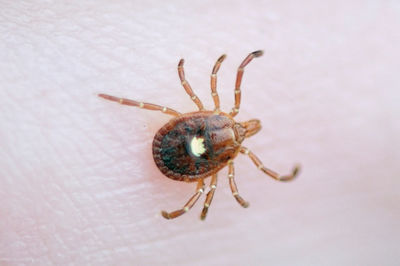
A lone star tick.
Centers for Disease Control and Prevention, providedTicks always pose a risk in the South, but the critters become more active this time of year.
Preventing exposure to ticks, which feed on blood, is important because some species can cause diseases.
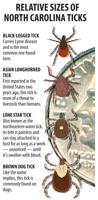
American dog tick
Active in the spring, summer, and fall. Lives along woodland paths, recreational parks, farm pastures, wastelands, and other shrubby habitats in rural and suburban area. Adult ticks prefer humans and dogs as hosts. Can transmit Rocky Mountain spotted fever, but not Lyme disease. Found throughout the state, but is most common in the Piedmont area.
Brown dog tick
Active year round and especially in warmer climates. Mostly feeds on dogs; rarely attacks people. They may reach nearly one-quarter of an inch long, although engorged females can get as big as a half-inch. It can transmit diseases to humans, including Rocky Mountain spotted fever, canine babesiosus and canine ehrlichiosis.
Lone star tick
Readily feeds on people and large wild or domestic animals, such as deer and dogs. Found in habitats similar to those of the American dog tick. Can transmit southern tick-associated rash infection, which creates a rash similar to that seen with Lyme disease. It also transmits bacteria that cause ehrlichiosis. Found mainly in the coastal plain, but also in the Piedmont. Has also been tied to the "alpha-gal allergy," where the person develops an allergy to mammal meat, such as beef.
Black-legged tick/deer tick
Nymphs and adults attack small and larger mammals including dogs and deer. Adults are active in late fall, in early spring, and in winter when temperatures rise above freezing. Found in the same habitats and regions of the state as the lone star tick. Bites can cause Lyme disease.
Source: N.C. State extension, Terminix
Get local news delivered to your inbox!

Maggie Silver, a health communication specialist for the CDC, said it's unclear how widespread the virus is.“It has likely been present for a …

You may not even know you’ve been bitten. But the consequences of a tick’s bite can range from a minor skin irritation to illness to even death.
Get up-to-the-minute news sent straight to your device.


Sorry, an error occurred.
Already Subscribed!
Cancel anytime
Thank you .
Your account has been registered, and you are now logged in.
Check your email for details.
Submitting this form below will send a message to your email with a link to change your password.
An email message containing instructions on how to reset your password has been sent to the email address listed on your account.
No promotional rates found.
Secure & Encrypted
Thank you.
Your gift purchase was successful! Your purchase was successful, and you are now logged in.
| Rate: | |
| Begins: | |
| Transaction ID: |
A receipt was sent to your email.