

In the aftermath of COVID-19, learning losses are among the most devastating, persistent consequences of the pandemic. Children from disadvantaged backgrounds were disproportionately impacted, creating both a learning and inequality crisis. Studies from the California School Boards Association and University of Chicago hail high-impact tutoring as a key solution for both issues.
In Guilford County Schools, implementation of high-impact tutoring has produced impressive results. All student groups improved their test proficiency scores this year.
High-impact tutoring program comes to the rescue
Like much of the nation, Guilford County Schools saw declines in student proficiency resulting from the pandemic and engaged the Institute for Partnerships in Education housed within UNC Greensboro, as a thought leadership partner. From these discussions emerged the Tutoring Collaborative, a program to support the district’s high-impact tutoring program recognized by the Biden administration for its innovation. Provided at no cost to students, Elementary and Secondary Emergency Relief funds underwrite the program.
High-impact tutoring is an evidence-based practice that helps students make significant and measurable gains in learning. As not all tutoring has been proven effective, the Tutoring Collaborative subscribes to the National Student Support Accelerator’s rigorous standards. At the heart of the program is a consistent and supportive tutor-student relationship with a well-trained tutor who receives ongoing support. Students are typically tutored three times weekly in groups that do not exceed three people with similar needs. The intensive program uses data to understand students’ strengths and needs and requires the tutor to adapt their approach if the student is not making the expected learning gains.

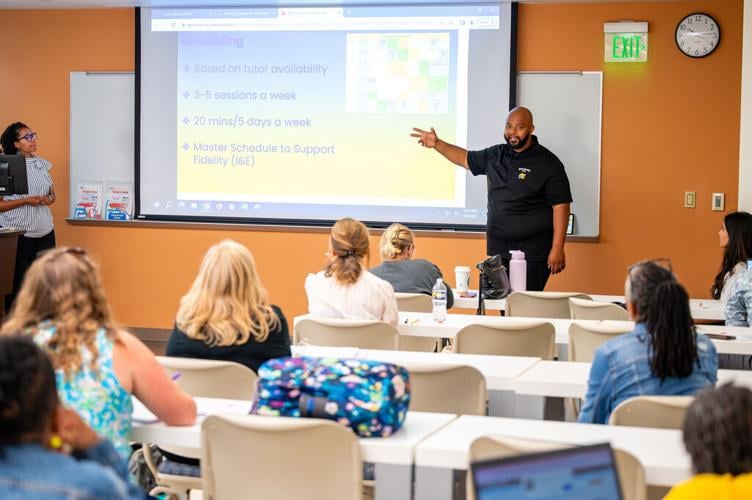
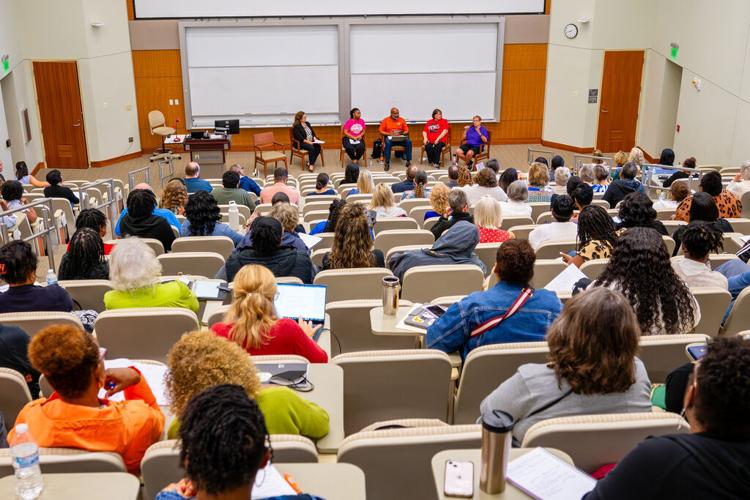
Tutoring Conference 2023: Guilford County teachers and tutors attend presentations and breakout sessions.
Well-trained and diverse tutors serve as change agents
As a Guilford County Schools tutoring partner, IPiE pulls from UNCG’s pool of graduate students, creating nearly 150 graduate assistantships representing more than 30 fields of study, to serve as tutors. The partnership is a win-win as these graduate students gain needed teaching experience while helping others succeed. The diversity of tutors, many of whom are international students, enhances the cultural relevancy of the program and introduces their charges to a host of career opportunities. Many tutors are initially attracted to the Tutoring Collaborative because they receive a stipend that helps them continue their studies, yet those who remain with the program for several semesters highlight the intangible rewards of impacting a young life as the reason they stay. “They revel in being a change agent,” said Megan Martin, senior program coordinator with IPiE.
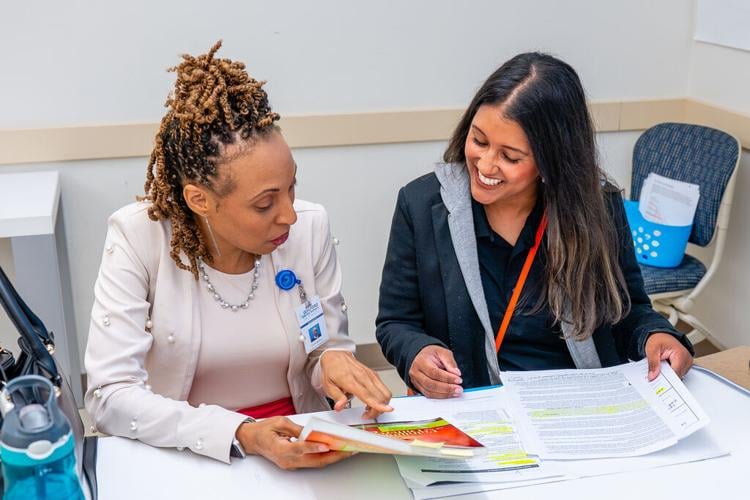
“Training and support are one of the factors that set IPiE tutors apart,” Martin said. GCS trains tutors on its curriculum content while IPiE teaches tutors how to be effective in their role and help each child flourish. As Martin said, “It’s not enough to know fractions. A tutor must discern how to teach fractions in a developmentally appropriate way, building on the partial understanding a child brings.” Tutors benefit from training modules typically available only to UNCG’s School of Education students along with on-site oversight and weekly coaching sessions.

300,000 tutoring sessions and counting
Kara Hamilton, tutoring director with Guilford County Schools said, “IPiE is a key partner in the tutors’ professional development and a critical piece of GCS’s overarching tutoring program.” The results are impressive. Last year, 12,000 students received tutoring, participating in more than 300,000 tutoring sessions, and all student groups improved their test proficiency scores.
For more information, visit ipie.uncg.edu.