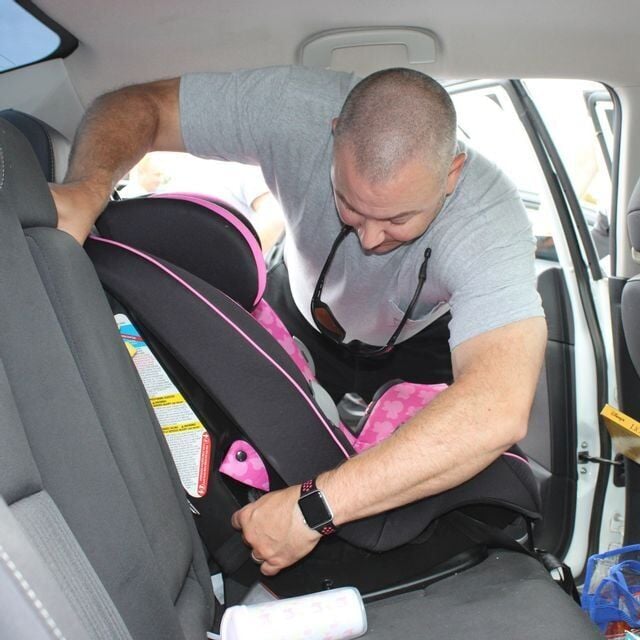
Every year, thousands of children are injured or killed in motor vehicle crashes. The best way to protect them is by ensuring they are properly secured in the right car seat, booster seat, or seat belt for their age, height, and weight.
That’s why Child Passenger Safety Week, recognized September 20-26, 2026, is so important, and why the Statesville Fire Department (SFD) is committed to keeping your family safe on the road.
Why proper car seat use matters
According to the National Highway Traffic Safety Administration (NHTSA):
Car crashes are a leading cause of death for children ages 1 to 13.
Properly installed car seats can reduce the risk of fatal injury in a crash by 71% for infants and 54% for toddlers.
Taking a few extra minutes to check your child’s car seat could save a life.
Rear-facing seats: Best for infants and toddlers. Keep your child rear-facing until they reach the seat’s maximum height or weight limit.
Forward-facing seats: Once children outgrow their rear-facing seat, move them to a forward-facing seat with a harness.
Booster seats: Children who outgrow a forward-facing seat should use a booster until a seat belt fits them properly.
Seat belts: Your child is ready to use a seat belt without a booster when it fits snugly across the upper thighs (not the stomach) and across the shoulder (not the neck or face).
Here’s what North Carolina law says (NC General Statute § 20-137.1):
Children under age 8 and under 80 pounds must be secured in a car seat or booster seat.
Children under age 5 and under 40 pounds must ride in the back seat (if the vehicle has one and if it’s equipped with a passenger-side airbag that’s active).
Once a child reaches age 8 or 80 pounds, they may legally use a seat belt alone, though safety experts recommend using a booster until the belt fits properly across the shoulder and hips.
This content is sourced from
Statesville
. It reflects the author's views and has not been edited by our newsroom. It may have been generated using AI assistance.